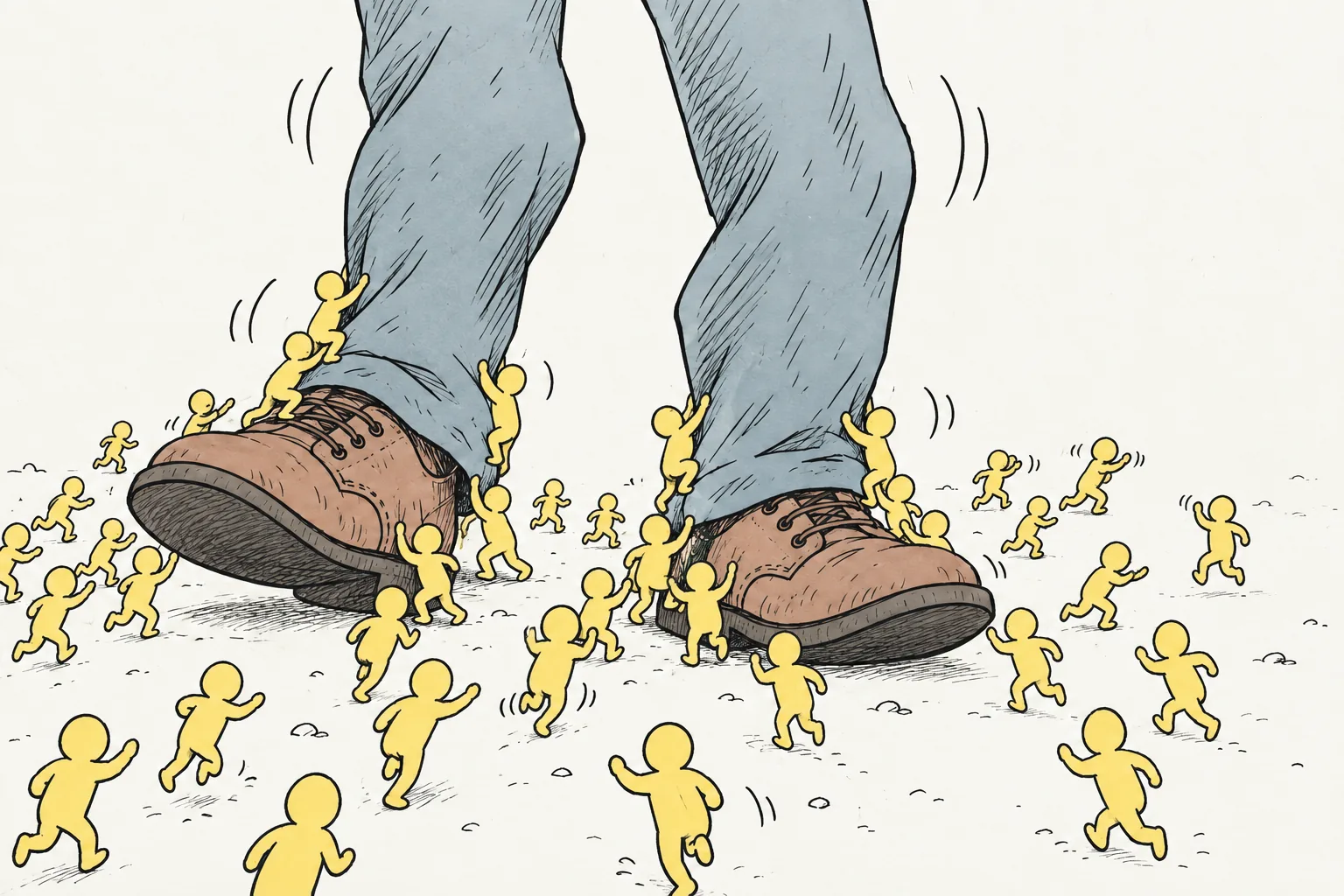
You collect money from the crowd and decide what can hold its attention. After a few rounds, the relationship between fees, distraction and people gathering together becomes hard to miss.
How money buys attention
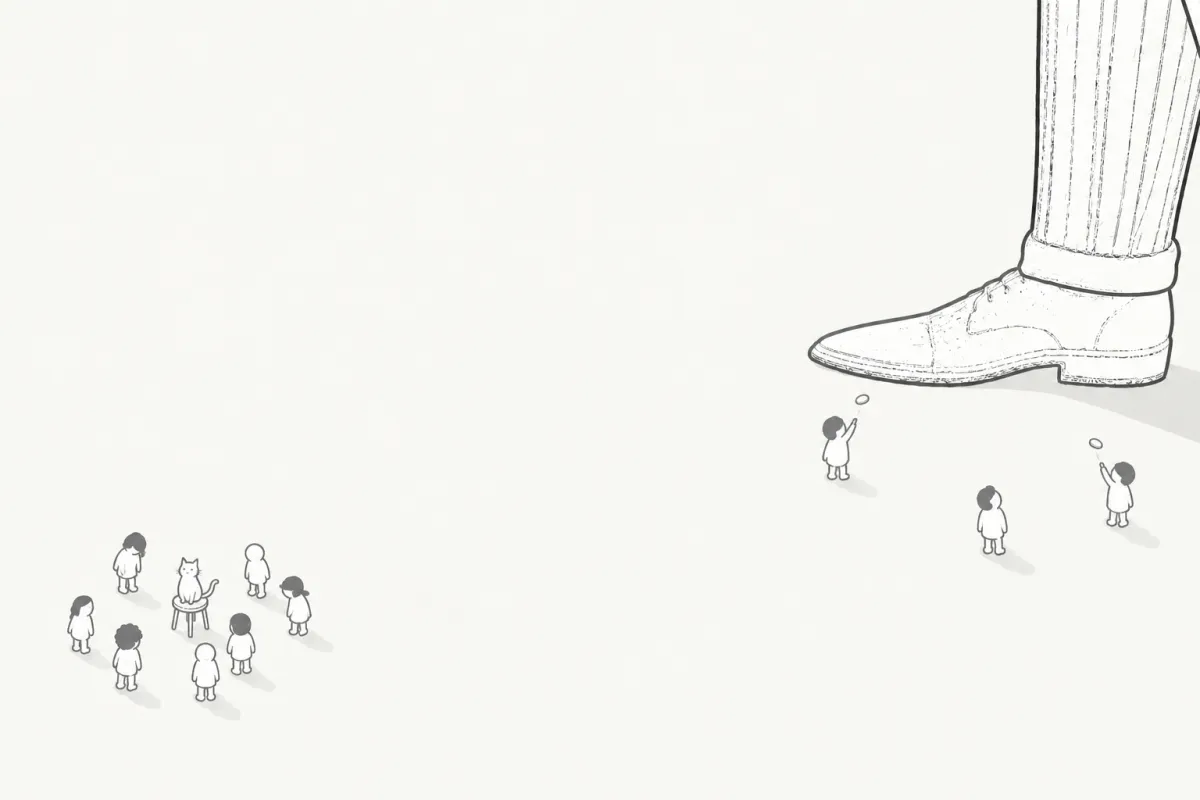
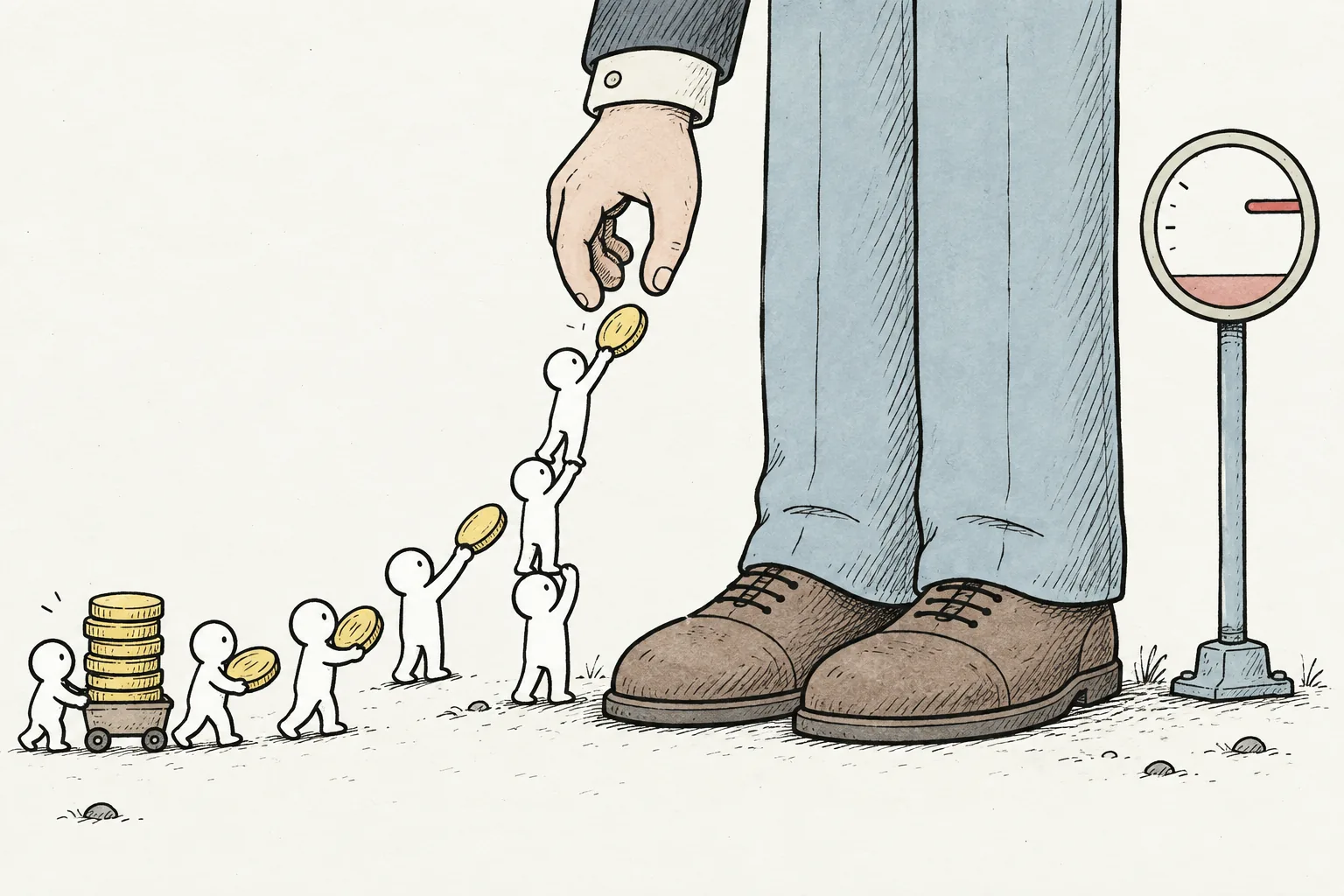
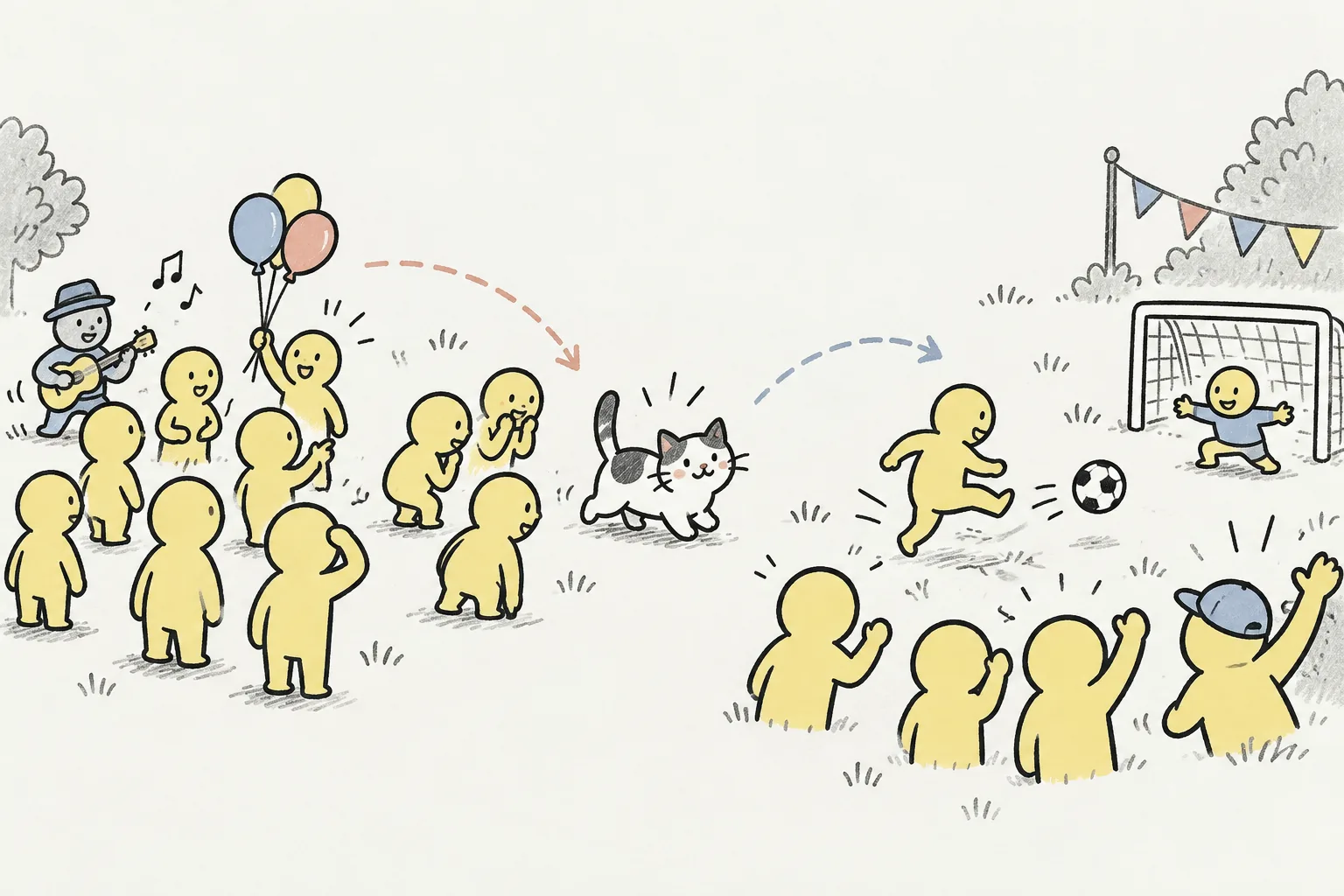
A higher fee sends more money upward, but it also makes more people look up. They stop paying as soon as they notice what is happening. So the money you gained has to be spent again: a cat, match, screen or trend turns eyes down for a while, and the fee can keep flowing.
The loop gives every quick gain a second cost. McCombs and Shaw’s agenda-setting work names one part of that picture: what stays in view can become what people treat as important.
Related reading: McCombs & Shaw (1972)
When the crowd argues, money still moves up
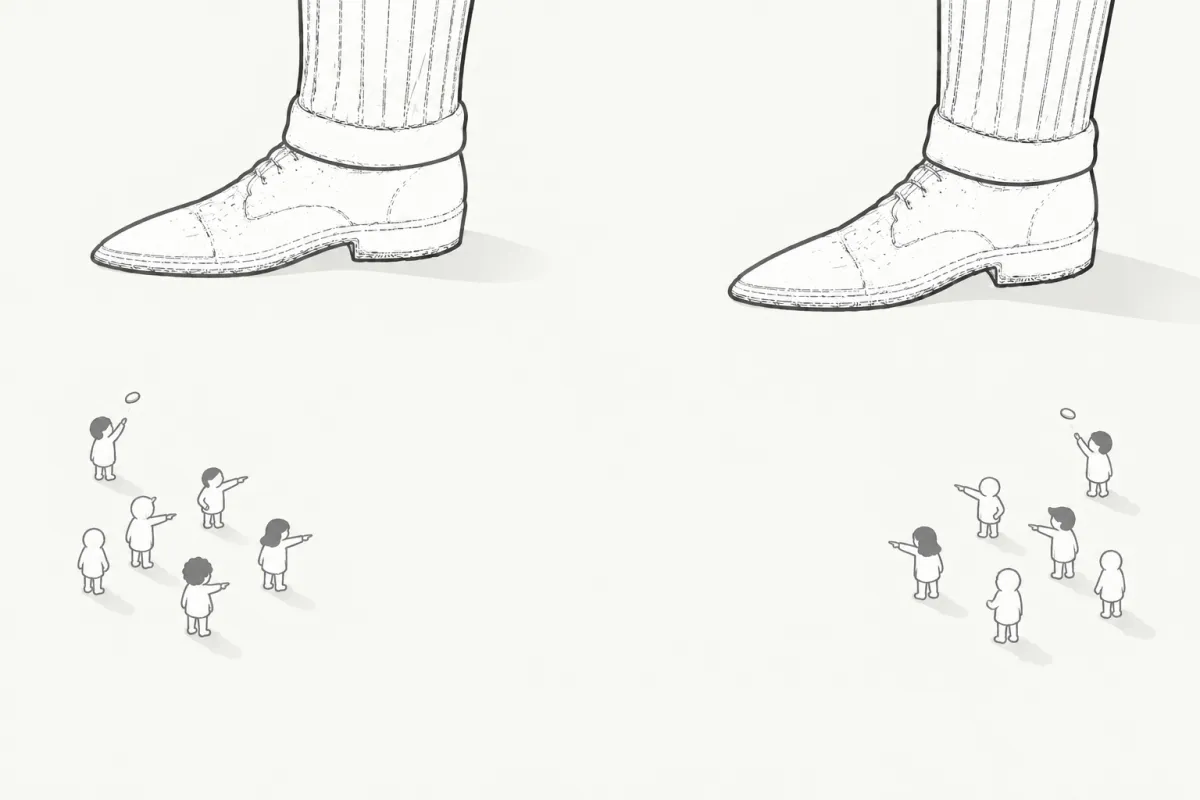
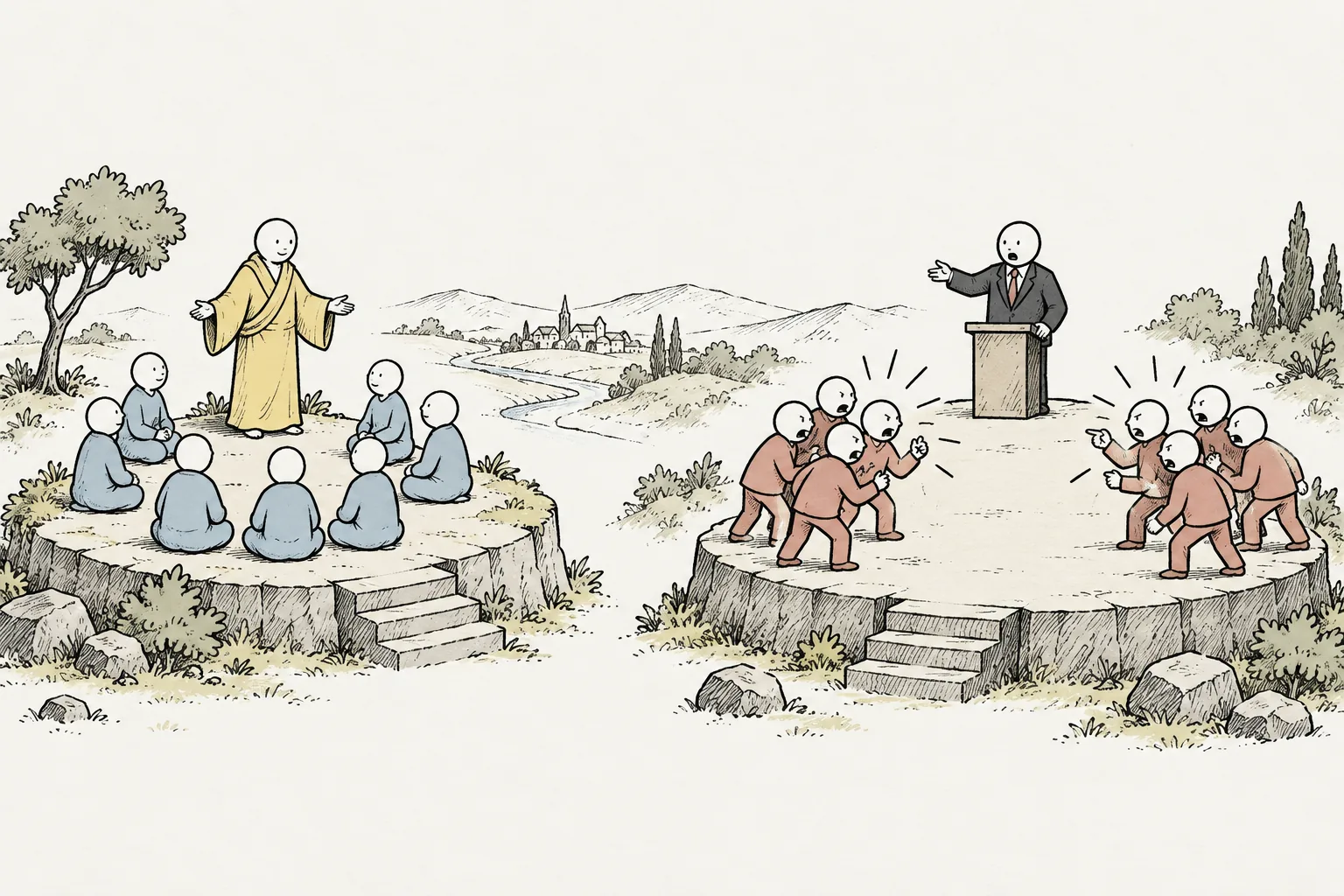
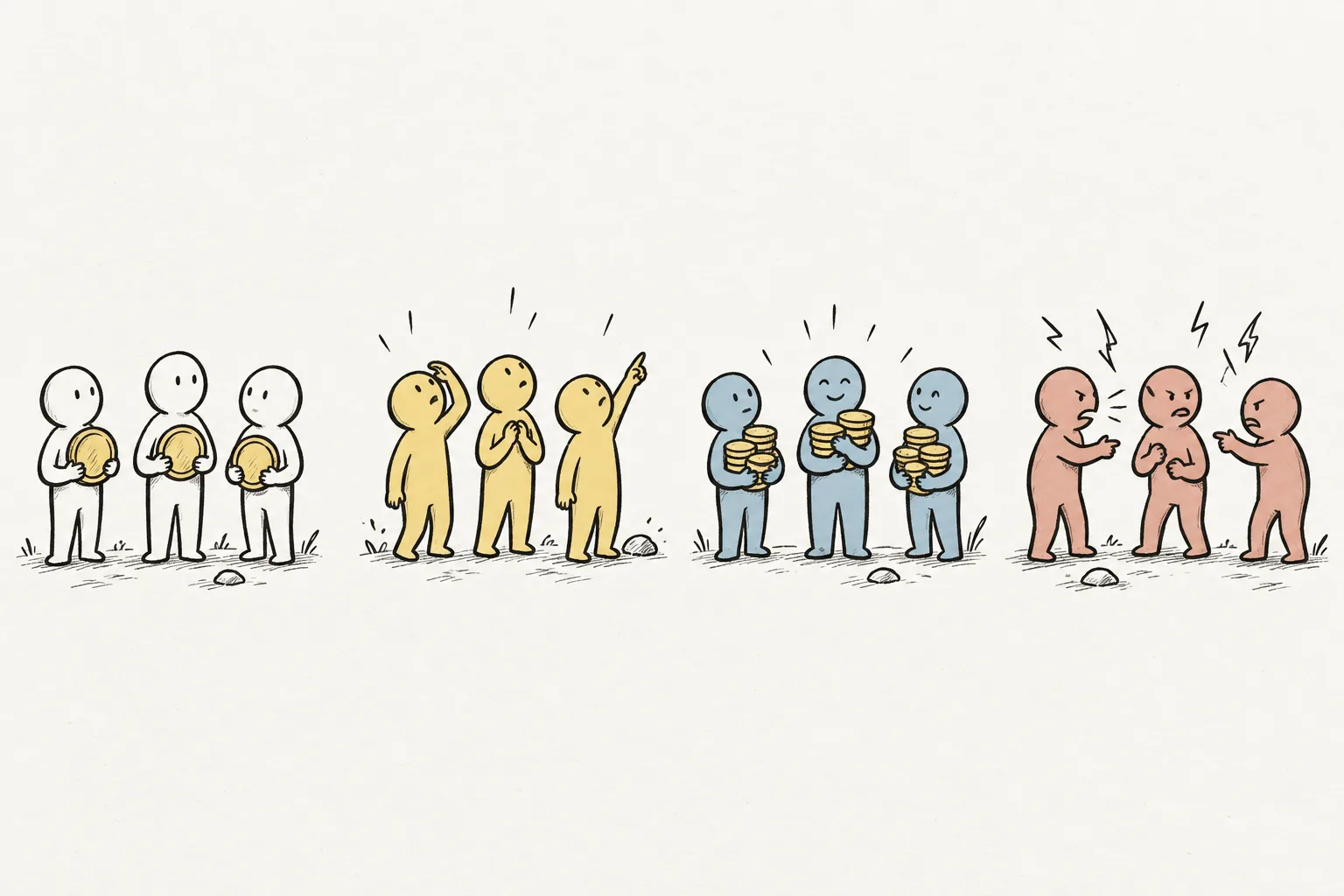
Red people are arguing. They still pay, but they are no longer walking as one yellow crowd toward the giant. A planted story or politician can break up a dangerous knot just long enough for you to buy time somewhere else on the map.
In their study, Brady and colleagues found that moral-emotional language was associated with more sharing in like-minded networks. Back in the game, red keeps people paying while their movement is no longer concentrated at the giant’s feet.
Related reading: Brady et al. (2017)
How the same fee comes to feel normal
Blue people are believers. They are harder to wake, and the rules make them the most reliable payers. On the screen, belief changes the practical feel of the same fee: what alarms one person barely interrupts another.
Kay and colleagues examine why existing arrangements can sometimes seem desirable. In experiments, Trump and White found no evidence that inequality information intensified that response. Paying may also reflect cost, habit or a lack of options, so payment alone cannot tell you whether someone approves.
Related reading: Kay et al. (2009); Trump & White (2018)
From one person looking up to a crowd moving closer
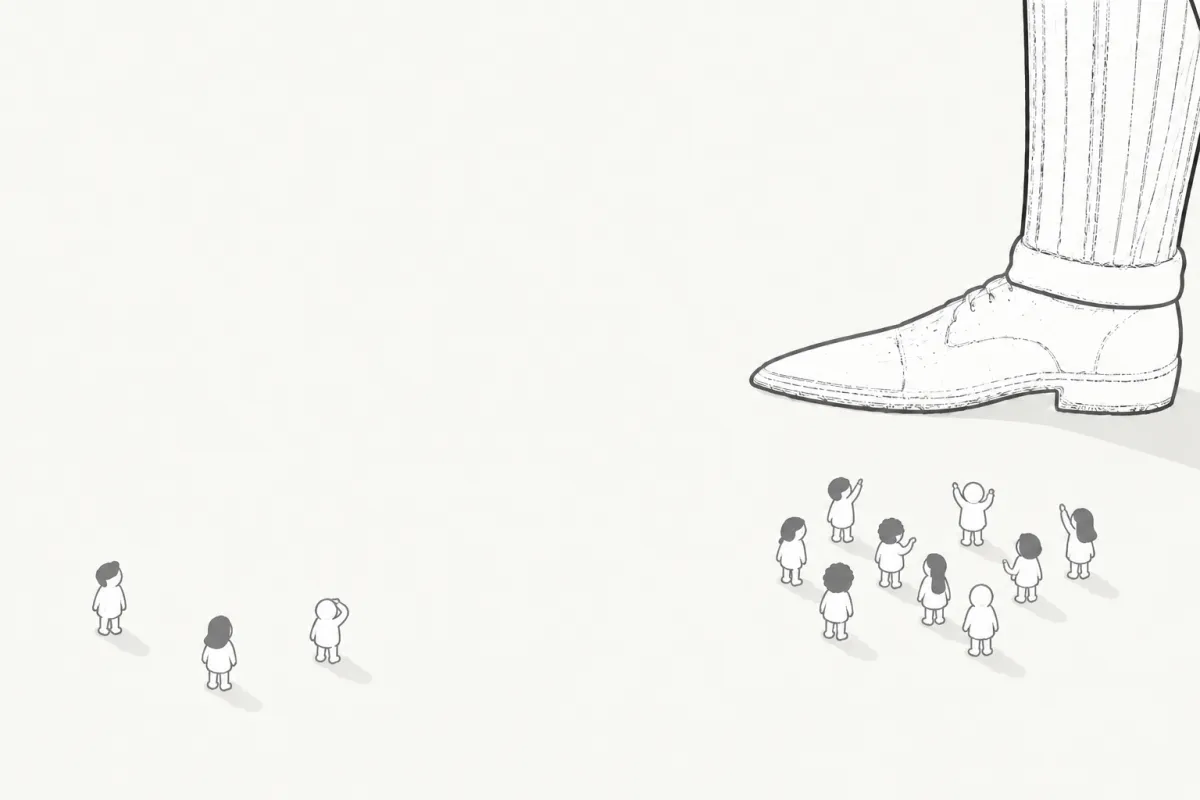
Yellow spreads when people see the giant and then see other people looking up. The danger is not one person’s notice but a cluster forming at your feet. Recognition becomes a shared scene: each new yellow person changes what nearby people can see and do.
Granovetter’s threshold model asks how other people’s participation can change the point at which someone joins. It helps frame why a crowd may move suddenly after looking scattered a moment earlier.
Related reading: Granovetter (1978)
What you protect when you win
Your goal is one trillion. For the people below, the same round is a rising fee, diverted attention and a path toward your feet. To win, you start counting their awareness as a risk. From the giant’s position, the same scene looks different.
Bogost’s writing on games argues that rules can express ideas through the actions they make possible. It offers a way to read the gap between your goal and the crowd’s position.
Related reading: Ian Bogost (2007)